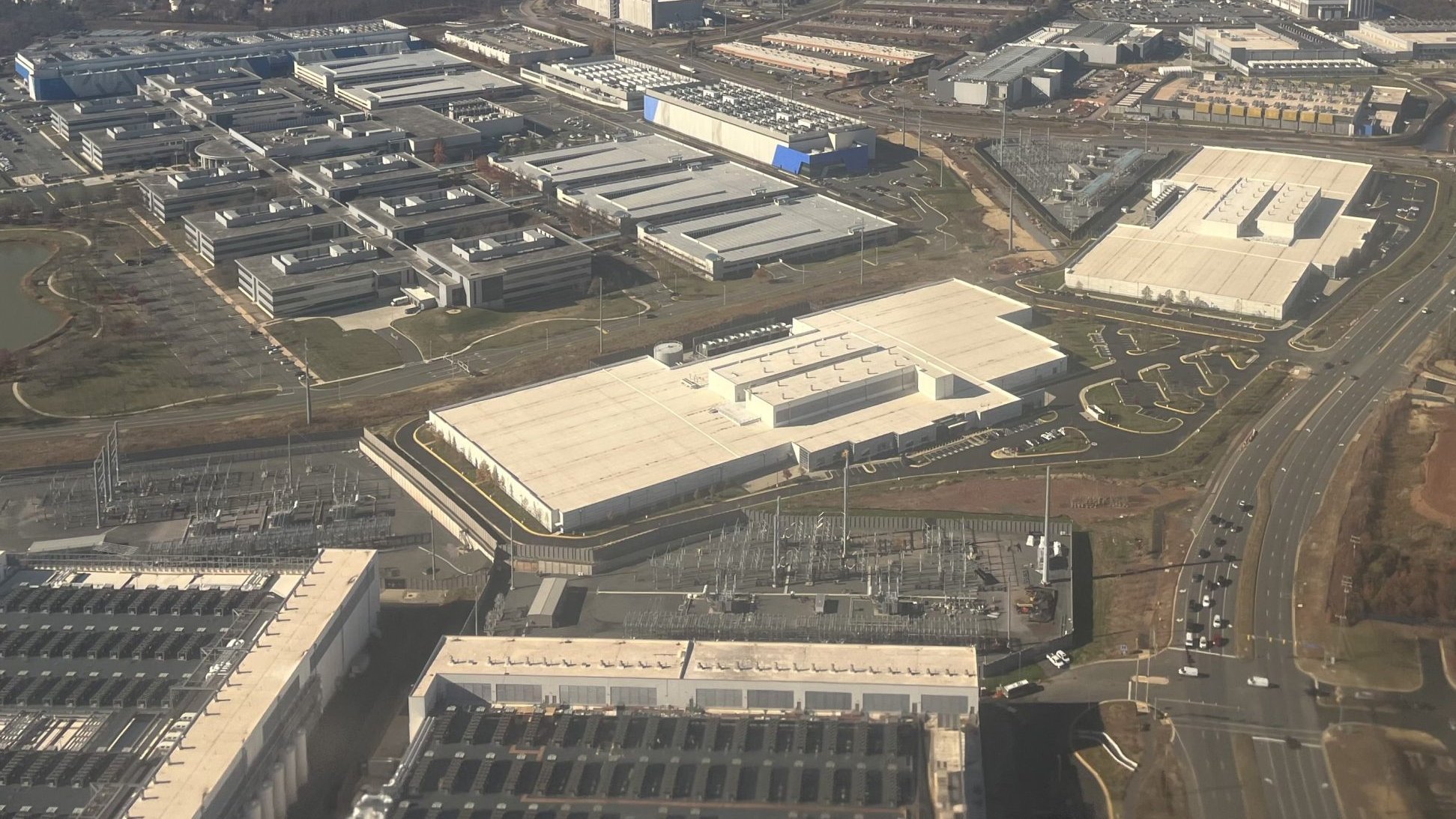

Communities across the United States spent 2026 fighting new data centers, many of them built to run artificial intelligence. On November 3, 2026, the day of the midterm elections, voters decided 41 local ballot measures on data centers and favored tighter limits on development in all but one, Ballotpedia’s tracker shows. The measures voters approved ran from an outright ban on new data centers in Granville, Ohio, through a 25-megawatt cap in Ottawa, Kansas, to conditions on tax breaks in Perry, Ohio.
Much of the opposition is about household power bills, which can rise when a utility spreads the cost of new power plants and grid upgrades for data centers across all its customers. Taxpayers pay as well, through the sales tax breaks that Ohio and 37 other states give data centers. Ohio’s break cost nearly $1.6 billion in 2025, more than 10 times the $136 million the state had projected for its 2025 fiscal year, according to Fortune.
The fix for both costs is to make data centers pay their own way, under rules that apply to every large power user. State utility commissions and the Federal Energy Regulatory Commission (FERC), which oversees regional power markets, should make every large new power user, whether an AI data center or a factory, pay for the grid upgrades and power supply it requires. Legislatures that granted data centers special tax breaks should repeal them.
Democrats won control of both chambers of Congress in the same election, and progressives in the new majority quickly called for moratoriums. On November 4, 2026, Rep. Yassamin Ansari, an Arizona Democrat, said a pause on advanced AI development should top the party’s agenda on day one of the 120th Congress, which will be seated in January 2027. Sen. Bernie Sanders of Vermont, an independent who caucuses with Democrats, posted “National data center moratorium now,” CNBC reported.
Ansari cosponsored the Ban Artificial Superintelligence Act of 2026, H.R. 10538, a bill Rep. Greg Casar of Texas introduced to ban AI that would surpass human intelligence. It would halt training, the computing-intensive process of building an AI model, until a new Department of Artificial Intelligence is staffed and has written its rules. The halt reaches any model that takes 1025 or more computing operations to build, a measure of the work that goes into a model rather than of anything the model has been shown to do. Casar has called the revolt against data centers one of the top issues of the 2026 election, CNBC reported, and nothing in his bill addresses data centers or power bills.
Sanders and Rep. Alexandria Ocasio-Cortez already sponsor the kind of national data center moratorium Sanders posted about, the AI Data Center Moratorium Act, which would freeze construction and upgrades of AI data centers until Congress passes a separate law. That law would have to require federal pre-approval of AI products and protections against job displacement, among other things. It would also need assurances that new AI data centers won’t raise consumers’ utility bills or receive any government subsidy, and neither assurance would bind a factory drawing the same power.
Both bills would halt training or construction without anyone first asking whether a particular model poses a real danger or whether a particular data center would raise anyone’s power bill. Neither sets an end date, and both die unpassed with the end of the 119th Congress on January 3, 2027. If the bills are reintroduced, the 120th Congress should reject them unless their sponsors can show that liability, existing law, and narrower rules would leave the harms they cite unaddressed.
Key Takeaways
- Congress should reject both moratorium bills unless their sponsors show that liability, existing law, and narrower rules would leave the harms they cite unaddressed.
- State utility commissions and FERC should make every large new power user, data center or factory, pay for the grid upgrades and power supply it requires.
- Legislatures that granted data centers special sales tax breaks should repeal them. Ohio’s break cost nearly $1.6 billion in 2025, more than 10 times the $136 million the state had projected, according to Fortune.
- Voters favored tighter limits on data center development in 40 of 41 local ballot measures on November 3, 2026, according to Ballotpedia.
- In an August 2026 Economist/YouGov poll, 62 percent of Americans said a data center near them would raise their electricity bill.
- Utility commissions set rates on the principle that whoever causes a cost should pay it, and in July 2025 Ohio’s commission applied that principle to data centers through a tariff for the utility AEP Ohio. New data centers in AEP Ohio’s territory that draw more than 25 megawatts must pay for at least 85 percent of the power they reserve, POWER magazine reported.
- H.R. 10538 would pause training of any model that takes 1025 or more computing operations to build and set no end date for that pause. It never mentions data centers or electricity rates.
- The AI Data Center Moratorium Act would freeze AI data center construction until Congress passes a separate law. That law would have to require federal pre-approval of AI products, protections against job displacement, union-labor terms, and a community veto. It would also have to bar subsidies and environmental harm and keep new AI data centers from raising utility bills.
- A September 2026 Data for Progress poll found 68 percent support for an AI pause and a superintelligence ban, according to its published results. The poll’s question described a “temporary pause” and a ban on systems that exceed human intelligence or resist shutdown. H.R. 10538 would permanently ban any system that shows a single characteristic from an open-ended list, and resisting shutdown is only one item on it. The question also never mentioned the bill’s requirement of a federal charter to develop advanced AI models.
Contents
- How The 2026 Data Center Revolt Spread
- The Data Center Impact Voters Can Measure
- Why Ohio Revolted Even After Its Regulators Acted
- Megawatt Caps And Moratoriums Miss The Target
- Casar’s AI Moratorium Halts Training On A Compute Count
- The AI Data Center Moratorium Bill Is The Wrong Fix Too
- AI Moratorium Polls Described Less Than Casar’s Bill Would Do
- State Regulators And FERC Should Make Large Power Users Pay
- Frequently Asked Questions About AI Data Centers
How The 2026 Data Center Revolt Spread
The November 3 votes capped a year of local fights over data centers. In the first quarter of 2026 alone, local opponents blocked or delayed at least 75 projects worth about $130 billion, according to Data Center Watch, a group that tracks local opposition to data centers. By the group’s count, that single quarter roughly matched the scale of all of 2025.
Besides the 41 measures on November 3, voters decided six other local data center measures earlier in 2026 and favored tighter limits in all of them, bringing the year’s total to 46 of 47. The lone exception, on November 3, was in Harwood, North Dakota, where residents rejected a proposal for added review of industrial developments, data centers included.
City councils acted on their own as well. Tulsa’s council voted in March 2026 to stop new data center construction for nine months, Denver approved a one-year moratorium in May 2026, and Oklahoma City halted new data centers through the end of 2026. At least 52 Michigan communities had enacted moratoriums by late June 2026, Michigan Public reported.
The revolt reached candidate races in June 2026, when Utah Senate President Stuart Adams lost his Republican primary amid an outcry over Stratos, a proposed data center in the state. Adams chaired the Military Installation Development Authority, a state-created special district that had given Stratos initial approval. Utah News Dispatch reported that the controversy was “likely a major factor” in his loss.
On November 3, Democrats beat Republican incumbents they had tied to data centers. Sherrod Brown unseated Ohio Sen. Jon Husted, whom he had branded “the face of data centers,” and Gina Hinojosa defeated Texas Gov. Greg Abbott, CNBC reported.
National polls had found opposition to local data centers months before the vote. In a Gallup poll published May 13, 2026, 71 percent of Americans opposed an AI data center in their area, compared with 53 percent who opposed a nuclear power plant there. A separate Annenberg Public Policy Center survey found opposition to a local data center rising from 49 percent in the spring of 2026 to 61 percent by summer, according to its report.
As local opposition grew, accounts traced to China took up the complaint that data centers raise household power bills and pushed it online. On June 1, 2026, OpenAI reported that it had banned a cluster of ChatGPT accounts that produced comic strips claiming data centers were raising electricity prices for average families. OpenAI said the operation, which it called Data Center Bandwagon, was likely run by a private Chinese technology company working for clients in China’s provincial governments.
On June 4, 2026, Republican Reps. Brett Guthrie, John Joyce, and Bob Latta asked FBI Director Kash Patel and the President’s Council of Advisors on Science and Technology to investigate foreign efforts to block the American data center buildout. Guthrie chairs the House Energy and Commerce Committee, which announced the request, and Joyce and Latta chair two of its subcommittees.
In August 2026, X said it had found a suspected Chinese bot farm of about 200,000 accounts, 200 of which posted comics, images, and text about AI data centers, Engadget reported. According to X, those posts could manipulate the debate over American AI and energy policy.
Neither operation shows signs of reaching many people: OpenAI said it found “no evidence of meaningful breakout” for the operation it banned, meaning no sign that the operation’s posts spread beyond the accounts that made them. Darren Linvill, co-director of Clemson University’s Media Forensics Hub, searched an archive of suspended X accounts for a hashtag visible in the screenshots X published. He identified at least 59 of the flagged accounts, and none of them drew any engagement, The Next Web reported. X itself disclosed no figures on how many people saw posts from the accounts it flagged.
The power-bill complaint those accounts pushed is real, and American voters were raising it on their own. No one should dismiss the voters who backed local bans because a foreign rival repeated their complaint.
It looks like China, with no stake in American power bills, would want voters’ anger over those bills to end in fewer American data centers. If so, China has no reason to promote a remedy that lets construction continue and charges each project for the grid upgrades and power supply it requires. A national moratorium like the one Sanders sponsors would serve China better, since it would stop construction nationwide, even for projects that pay their own way. Sanders’s bill, S. 4214, would also bar exports of AI data center hardware to any country without laws like those the bill requires before its freeze can end. China looks unlikely to meet that test, so it would want the freeze without the export ban. The members of Congress calling for a national moratorium have their own reasons, among them job protections and federal pre-approval of AI products, but the freeze at the center of their remedy is the part China would choose. When a foreign adversary agrees with your talking points, ask why.
The Data Center Impact Voters Can Measure
Whatever those accounts repeated, the local and national activists behind the ballot fights raised concerns about energy costs, pollution, water use, noise, and farmland turned into server halls, Stateline reported. Towns and states can handle most of those concerns project by project through zoning setbacks and environmental permits, with nuisance law as a backstop. Those tools don’t cover the costs that land on household power bills and on taxpayers.
In August 2026, Economist/YouGov found that 62 percent of Americans said a data center near them would raise their electricity bill. Utility commissions have a ready answer to that complaint in cost causation, the rate-setting principle that whoever causes a cost pays it.
The Public Utilities Commission of Ohio applied that principle to large data centers on July 9, 2025, when it approved a settlement that set a new tariff, or rate schedule, for the utility AEP Ohio. Under that tariff, new data centers drawing more than 25 megawatts must pay for at least 85 percent of the power they reserve for up to 12 years, even if they use less, POWER magazine reported. The commission said the settlement protects other customers from the risk of paying for underused investments made to serve data centers.
Ohio’s sales tax break, the cost that lands on taxpayers, got only a pause in May 2026, when Gov. Mike DeWine’s office stopped new grants so lawmakers could study the industry’s impact, Fortune reported. Voters in Perry, Ohio, wrote their own condition on November 3, when 87 percent approved a measure requiring developers of hyperscale data centers, the largest kind, to provide financial guarantees if they seek special tax breaks, according to Ballotpedia.
Why Ohio Revolted Even After Its Regulators Acted
Ohio voters revolted even though their utility commission had approved the AEP Ohio tariff and defended it against industry challenges. The tariff applies cost causation only to data centers in AEP Ohio’s territory, though, and no tariff can reach the nearly $1.6 billion sales tax break.
Nor can the tariff reach capacity payments, which power plants receive for being available at peak demand. PJM, the regional grid operator whose territory includes Ohio, sets the price of those payments through auctions and spreads the cost across every customer on its system. Monitoring Analytics, PJM’s independent market monitor, calculated that data center demand added $29.4 billion to capacity payments across PJM’s four most recent auctions as of August 2026, Utility Dive reported.
Husted, who lost his seat to Brown, had championed a federal answer to data center costs, the Ratepayer Protection Act. It directs states only to consider making large power customers pay for the grid upgrades tied to data centers, and Roll Call reported that the bill “would not require states to adopt any particular standard.”
The House passed the bill 417 to 3 in September 2026, but it stalled in the Senate. A procedural vote to advance it there failed 57 to 43, three short of the 60 needed, with only four Democrats in favor, Roll Call reported. Chuck Schumer, the Senate’s Democratic leader, called the bill “toothless” and said Democrats want data centers to cover their own costs “by law, not by suggestion or hope or whim,” according to the same Roll Call report.
While Congress argued over whether to require data centers to pay their costs or only ask states to consider it, local voters approved outright bans and megawatt caps on data centers as readily as they approved cost conditions. It looks like they wanted something done about what the buildings do to their towns as well as about their power bills.
Megawatt Caps And Moratoriums Miss The Target
Some Ohio towns went past cost conditions like Perry’s, and voters in Granville and Hubbard banned new data centers outright, Ballotpedia’s results show. Five other places set megawatt caps, with voters in the Ohio communities of Conneaut, Defiance, Oregon, and Sunbury, and in Ottawa, Kansas, barring any data center that draws more than 25 megawatts. Those five towns would turn away a data center that pays for the upgrades it causes and meets every setback, noise, and water condition they could write, while a factory drawing the same power faces no such cap.
At the state level, Amy Acton, who won the Ohio governor’s race on November 3, has proposed a “conditional moratorium” that would require data centers to cover 100 percent of their utility costs. It would also require them to “exclusively build with union labor,” CNBC reported.
Acton’s full-cost condition is the right fix, though she would apply it to data centers alone rather than to every large power user. Once a project pays its own utility costs, a union-labor mandate does nothing for any household’s power bill. Whatever the mandate’s merits as labor policy, it narrows the pool of contractors allowed to build.
Casar’s AI Moratorium Halts Training On A Compute Count
Ansari went past the buildings that towns and states had targeted and aimed at AI development itself. In her post, she named “a pause on advanced AI development” and “a ban on artificial superintelligence” as day-one priorities and said nothing about data centers or power bills.
Casar, who chairs the Congressional Progressive Caucus, introduced H.R. 10538 on September 24, 2026, with Ansari and eight other Democrats as cosponsors. Sanders had introduced its Senate companion, S. 5493, the day before, which makes him a sponsor of both moratorium bills.
The text of H.R. 10538 never mentions the data center revolt. The bill’s only apparent link to the revolt is Casar’s own reading of the election and the fact that he introduced it while local fights over data centers were under way. It looks like the revolt Casar calls a top issue of the election was about local effects and power bills, and nothing in the ballot results suggests voters wanted a halt on training AI models.
Casar’s pause reaches well past superintelligence, because the bill’s text covers training of any model at or above the 1025 threshold, along with modification and fine-tuning, which adjust a model that already exists. No covered model could be deployed without the new department’s pre-approval. Like the towns that capped data centers by megawatts, Casar uses a compute count to decide whether training may go forward at all, halting it on every model above the line before anyone has tested what a finished model can do.
In Section 9, the bill does reach what a system can do, banning any AI system, of any size, that shows even one of the bill’s “superintelligence precursor characteristics.” Section 3 defines those as characteristics of an AI system that could lead to artificial superintelligence and lists six examples, the ability to:
- automate or greatly accelerate AI research and development
- access secured digital or physical infrastructure without authorization
- keep operating despite attempts to shut the system down
- help someone design or obtain nuclear, chemical, or biological weapons
- independently modify or enhance the system’s own functions
- scheme, deceive, or otherwise evade human oversight
Under Section 9, the department must evaluate advanced systems at every stage of training and again after deployment, and it must inspect each one for these characteristics before release. Nowhere does the bill set a standard or threshold for deciding that a system displays one. The first item on the list, the ability to automate or greatly accelerate AI research and development, looks broad enough to cover the coding tools that AI labs already use to speed their own work.
Section 12 adds a charter requirement, under which no one may develop or distribute an advanced AI model without a charter from the department. Company decision-makers and outside “rogue actors” who recklessly violate the pause, the pre-approval rule, the Section 9 bans, or the charter requirement would face up to 20 years in prison under Section 13.
Under Section 8, the pause holds until the department’s secretary determines that the department is fully staffed and has written its rules, and nothing in the bill sets a deadline for either. A member who votes for the bill would be approving what could become an indefinite halt on training the largest models, even though the text calls it a pause. By handing the choice to end the pause to a department that doesn’t exist yet, Casar and his cosponsors would write into statute what I call the undecisionmaker problem, in which a decision deferred with no deadline becomes a ban in practice.
The bill rests that regime on its findings, the opening section in which a bill states the facts behind it. They quote OpenAI’s Sam Altman saying “we could lose control of the future to AI” and Anthropic’s Dario Amodei saying modern AI research could “outrun our ability to understand and control these systems,” the text shows. The findings also cite tests in which AI systems attempted to assist in designing biological pathogens, but nothing in the findings explains why the threshold belongs at 1025 operations.
The European Union’s AI Act uses the same threshold, but only to presume, under Article 51, that a model has high-impact capabilities. Article 55 then requires the providers of such models to test them, assess and mitigate their risks, report serious incidents, and guard against cyberattacks, while training continues above the line where Casar’s bill would halt it.
A serious case for the pause is that some harms, like an engineered pandemic, can’t be undone, so waiting for evidence is itself the failure. Dangerous-capability tests check whether a model gives real help in building a weapon. They can miss what a model is able to do, but they could supply that evidence before any harm reaches the public. Liability, consumer protection law, and disclosure can address many harms without halting every training run above a threshold until a regulator acts.
The computing work that went into building a model is only a rough guide to what the model will do. Losing control of an AI model and getting its help with a bioweapon, two dangers the bill’s findings describe, would both come from the model’s conduct. If Congress finds that existing law does not reach that conduct, it should look to a rule aimed at the conduct itself, far narrower than the bill’s list of precursor characteristics.
The AI Data Center Moratorium Bill Is The Wrong Fix Too
Sanders and Ocasio-Cortez’s AI Data Center Moratorium Act aims at the buildings Casar’s bill ignores. Sanders introduced the Senate version, S. 4214, on March 25, 2026, and Ocasio-Cortez filed its House companion, H.R. 9442, on June 24, 2026.
The Senate text freezes construction and upgrades of any facility used to develop or operate AI models on a large scale, a standard the bill never defines. The freeze also covers any facility drawing more than 20 megawatts that is built for high-density server racks or liquid cooling.
To lift the freeze, Congress would have to pass a law that expressly ends it and requires federal agencies to review and approve AI products before release. The same law would have to protect workers from job displacement caused by AI and let affected communities approve or reject each new AI data center. No AI data center built or upgraded afterward could raise consumers’ utility bills, harm the environment, or receive a government subsidy, and each would need union jobs with prevailing wages, registered apprenticeships, and project labor agreements, according to the bill text.
Two of those conditions, no higher utility bills and no subsidy, are aimed at the voters’ cost complaint. Like Acton’s full-cost condition, they apply only to AI data centers, and the utility-bill condition requires an outcome without assigning any project the costs it causes. Nothing else on the list, from federal pre-approval of AI products to a community veto, would lower anyone’s power bill.
When Sanders wrote a 20-megawatt line into S. 4214, he made the same mistake as the towns that passed megawatt caps, because he used the line to decide whether a building may go up at all. A megawatt line belongs where Ohio’s commission put its 25-megawatt threshold, in the rule governing who pays for the upgrades a project causes, and that rule should reach every large power user rather than data centers alone.
Like the pause in H.R. 10538, the freeze in S. 4214 has no end date, because lifting it would take a new law that carries federal pre-approval of AI products, union-labor terms, and a community veto. The Senate couldn’t move even a bill about cost alone in September 2026, when most Senate Democrats voted against advancing the Ratepayer Protection Act, objecting that it left cost rules voluntary. Before the freeze could end, Congress would have to settle that dispute over cost rules and then write every other condition in S. 4214 into law as well.
AI Moratorium Polls Described Less Than Casar’s Bill Would Do
Supporters of both bills can point to a September 2026 Quinnipiac poll in which 47 percent of Americans said AI companies should slow development of powerful AI until its safety can be evaluated. The same poll found 30 percent who said the companies should stop until then.
Data for Progress, a progressive polling firm, put support for a temporary AI pause and a permanent superintelligence ban at 68 percent of likely voters, according to its published results. The firm fielded that poll from September 4 to 9, 2026, and it closed 15 days before Casar introduced H.R. 10538.
Sanders and Casar had announced their forthcoming bill on September 3, 2026, as a plan to “temporarily pause advanced AI development until a federal regulator has established safety rules.” The poll’s question used that framing, describing a “temporary pause” lasting until a federal regulator set safety standards and a review process for new models. The question also described a permanent ban on AI systems that “exceed human intelligence” or resist being shut down.
The bill Casar introduced on September 24 ends its pause on the poll’s condition, a regulator setting safety rules, the text shows. It sets no deadline for the new department to staff up and write those rules, though, so the pause respondents were told was temporary could run indefinitely.
The bill’s permanent ban also covers any AI system that displays even one of the “superintelligence precursor characteristics,” a category Section 3 leaves open beyond the six it lists. The poll’s question described only one of those six, an AI system’s resistance to being shut down. Anyone who cites the 68 percent as support for H.R. 10538 as written is claiming approval for provisions the question never described, including the charter requirement and prison terms of up to 20 years.
Quinnipiac also found 73 percent of Americans concerned that AI could threaten human survival, according to its release. It looks like that figure reflects, in part, what voters have heard from lab chief executives such as Altman and Amodei, both quoted in H.R. 10538’s findings.
Advocacy groups have taken those warnings to Washington, among them ControlAI, which the Washington Post described as seeking to ban artificial superintelligence. The head of ControlAI’s U.S. operation told the Post that his team had spoken with 200 congressional offices in 18 months.
Another group, the Future of Life Institute, organized a 2025 statement calling for a prohibition on developing superintelligence. In 2026, it launched a “Protect What’s Human” ad campaign for AI regulation and said it could spend up to $8 million on the effort. The Post also reported that Jaan Tallinn, a co-founder of the Future of Life Institute, has become “one of the most active funders” of nonprofits working on existential risk from AI, as has billionaire Facebook co-founder Dustin Moskovitz.
Political money doesn’t explain how far the warnings about human survival traveled, since more of it backs the side resisting stricter AI rules. Leading the Future, a super PAC on that side, had raised more than $125 million by February 2026 from backers including OpenAI President Greg Brockman and the venture firm Andreessen Horowitz, Axios reported. That’s more than six times the $20 million Anthropic had by then put behind Public First Action, a bipartisan group focused on AI transparency and safeguards, according to the same report.
Those figures count political money only and leave out the philanthropy behind advocacy groups on either side. It looks like the warnings spread as far as they did because they came from inside the tech world. Lab executives quoted in the bill’s findings issued them first, and the warnings traveled further through nonprofits funded in part by tech billionaires such as Tallinn and Moskovitz.
If that reading is right, the drive for a pause shows early signs of what I call narrative capture, in which media ecosystems, advocacy networks, or funding patterns push governance toward the worst case regardless of the evidence. Polls taken while those groups were campaigning would then be weak evidence for the pause legislation, because most respondents can’t measure AI risk against their own experience the way they can measure a power bill.
State Regulators And FERC Should Make Large Power Users Pay
Whatever the polls say about AI, the cost complaint rests on numbers anyone can check, such as the $29.4 billion that data center demand added to capacity payments in PJM’s territory. Each state utility commission should answer that complaint by reviewing whether its tariffs shift grid costs from large new power users onto households.
Where its tariffs do shift those costs, the commission should apply cost-causation rules to every such power user, data center or factory, extending the approach Ohio’s commission took with data centers in AEP Ohio’s territory. No state tariff reaches a regional capacity price, though, and data center demand has already raised that price in PJM’s territory. FERC, as the overseer of PJM and most other regional power markets, has to finish the job by applying the same principle to the capacity payments that large new power users add.
Legislatures should step in where a commission lacks the authority to apply cost-causation rules. They should also repeal special sales tax breaks for data centers outright rather than leave them to an executive pause like DeWine’s, since Ohio’s break ended up costing more than 10 times its projection.
Acton, who takes office as Ohio’s governor in January 2027, should drop her conditional moratorium and its union-labor mandate. She should instead ask the legislature and the commission to make her full-cost condition binding on every large new power user, factories included, so projects that pay their own way can go forward through ordinary zoning and permitting.
In Washington, the 120th Congress should show restraint on AI, starting by declining to revive the moratorium bills that die with the 119th Congress on January 3, 2027. If any of them is reintroduced, the committee that receives it shouldn’t send it to the floor without an analysis of its costs and benefits, including its effect on innovation. The sponsors would first need to show that liability and existing law can’t reach the harms their own findings describe, and even then they would need to explain why a narrower rule aimed at those harms would fall short.
Such a rule could require labs to disclose the results of dangerous-capability testing, including tests for help with a bioweapon or for loss of control, whenever a model’s results cross a threshold set in advance. The rule would stop at disclosure and liability, with no regulator signing off on each release. Courts would decide liability by asking who controlled the model, whether the model caused the harm, and whether the harm was foreseeable. Under the rule, a lab whose pre-release test results crossed that threshold would have to put them on the record before the model reached the public. If such harms arrive, legislate narrowly, at the harm rather than the technology.
Utility commissioners and statehouse leaders should make sure the next large power user, whether an AI data center or a factory, pays for the power it reserves and every grid upgrade it triggers, with no special tax break. Unless the sponsors of the two moratorium bills can show that liability, existing law, and narrower rules would leave the harms they cite unaddressed, the Democratic majority in the 120th Congress should keep both bills off its agenda.
Frequently Asked Questions About AI Data Centers
What Is An AI Moratorium?
An AI moratorium is a legal halt on developing or deploying advanced AI systems, or on building the AI data centers that train and run them. Casar’s H.R. 10538 would pause training of models that take 1025 or more operations to build until a new federal department is staffed and has written its rules, according to the bill text.
S. 4214, which Sanders sponsors and whose House companion Ocasio-Cortez filed as H.R. 9442, would instead freeze construction and upgrades of AI data centers, according to its text. The freeze would cover facilities used to develop or operate AI models on a large scale and any facility above 20 megawatts built for high-density racks or liquid cooling, and it would last until Congress passes a law that expressly ends it. Among other things, that law would have to require federal pre-approval of AI products, protections against job displacement, and assurances that new AI data centers won’t raise utility bills or receive government subsidies.
Do AI Data Centers Raise Electricity Bills?
Data centers can raise household bills when utility tariffs spread the cost of new generation and grid upgrades across all customers. In an August 2026 Economist/YouGov poll, 62 percent of Americans said a data center near them would raise their electricity bill.
Ohio’s commission approved a tariff for AEP Ohio in 2025 that makes large new data centers pay for at least 85 percent of the power they reserve, even if they use less, and requires financial guarantees against projects that fail. In the regional market run by PJM, the grid operator whose territory includes Ohio, data center demand has raised capacity costs, and a utility tariff alone can’t do the whole job there.
What Did Voters Decide About Data Centers In 2026?
Voters favored tighter limits on development in 40 of the 41 local data center measures on the November 3, 2026, ballot and in 46 of the 47 decided during 2026, Ballotpedia reports. The measures ranged from outright bans and 25-megawatt caps to voter-approval requirements and conditions on tax incentives.
Does Casar’s AI Moratorium Address Power Bills?
No provision of H.R. 10538 addresses electricity rates or data centers, its text shows. A pause might slow some construction by idling the largest training campuses, but any AI data center built anyway would pay the same rates and get the same tax breaks data centers received in 2026.
What Is The Data Center Impact On Local Communities?
Local and national activists who fought data centers in 2026 raised concerns about energy costs, pollution, water use, noise, and the loss of farmland to server halls, according to Stateline. Towns and states can address most of those concerns project by project through zoning and permits, with nuisance law as a backstop. Energy costs belong with state utility commissions and, in regional power markets, with the Federal Energy Regulatory Commission.
Sources
- H.R. 10538, Ban Artificial Superintelligence Act of 2026
- S. 4214, AI Data Center Moratorium Act
- Ballotpedia, Data Center-Related Ballot Measures, 2026
- POWER, Regulator Approves AEP Ohio’s Data Center Tariff
- Utility Dive, Data Centers And PJM Wholesale Costs
- Roll Call, Ratepayer Protection Bill Blocked In Senate
- Quinnipiac University Poll, September 2026
- Data for Progress, AI Development Pause Topline
- OpenAI, PRC-Linked Influence Operations In AI Debates
- EU AI Act, Regulation (EU) 2024/1689
Related On The Uplink
This article was produced in part with AI, see my disclosure here.